
Introduction
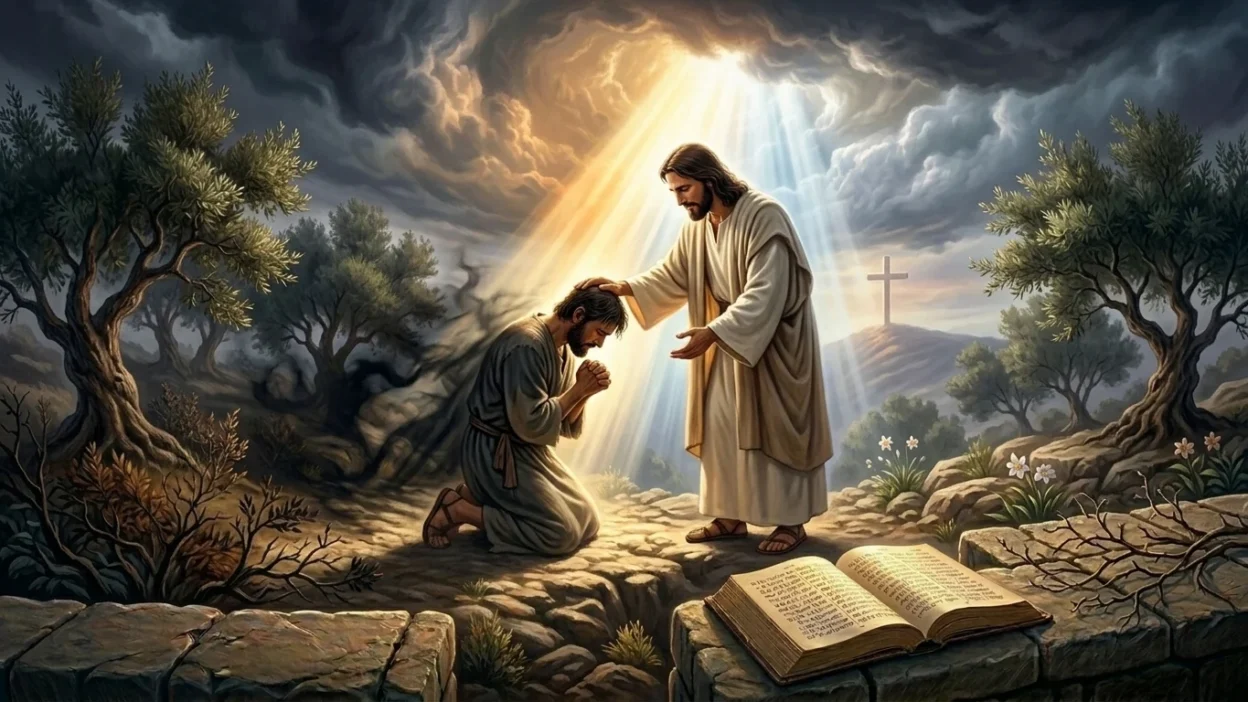
Imagine carrying a heavy stone in your heart. It may represent guilt, regret, or something you wish you could undo. Then imagine setting that stone down and finally breathing freely again. For many Christians, this picture helps explain the beauty of forgiveness. The forgiveness of sins biblical meaning points to God’s gracious act of removing guilt, restoring fellowship, and giving people a new beginning through His mercy. Scripture presents forgiveness not as something people earn, but as a gift that flows from God’s love and grace.
When people search for the forgiveness of sins biblical meaning, they often want to know what the Bible says about sin, repentance, grace, and restoration. They may also wonder whether God can truly forgive their past. The good news of Scripture is clear: God invites people to turn to Him, confess their sins, trust in Christ, and receive His mercy. Understanding this truth can bring deep peace, hope, freedom, and spiritual renewal.
Quick Answer
The forgiveness of sins biblical meaning is God’s gracious removal of sin and guilt when people repent and trust in Him.
Through Jesus Christ, God offers forgiveness, reconciliation, and a restored relationship with Him.
Biblical forgiveness brings freedom from guilt and calls believers to forgive others as they have been forgiven.
What Is the Biblical Meaning of Forgiveness of Sins?
The forgiveness of sins biblical meaning centers on God’s mercy toward people who have sinned.
Sin separates people from God. Yet Scripture repeatedly shows that God does not desire to leave people trapped in guilt.
Instead, He calls them to repentance.
Psalm 103:12 gives a beautiful picture:
“As far as the east is from the west, so far has he removed our transgressions from us.”
Forgiveness means that God no longer holds forgiven sin against the person in the same way.
Key Biblical Meaning
| Biblical Idea | Meaning |
|---|---|
| Sin | Rebellion or disobedience against God |
| Forgiveness | Release from guilt and sin |
| Repentance | Turning away from sin toward God |
| Grace | God’s undeserved favor |
| Mercy | God’s compassion toward sinners |
| Reconciliation | Restored relationship with God |
Therefore, biblical forgiveness involves more than simply forgetting a mistake. It points to restoration, cleansing, mercy, and renewed fellowship with God.
Origin and History of Biblical Forgiveness
Forgiveness appears throughout the Old Testament.
God gave Israel a system of sacrifices that taught people about sin, repentance, cleansing, and reconciliation.
Leviticus 17:11 explains the importance of blood in making atonement.
However, the Old Testament also emphasizes that God wants genuine repentance rather than empty religious actions.
Psalm 51 is a powerful example. After David sinned, he cried out to God for mercy and cleansing.
He prayed:
“Create in me a pure heart, O God, and renew a steadfast spirit within me.” — Psalm 51:10
Development of the Biblical Teaching
| Biblical Period | Main Emphasis | Example |
|---|---|---|
| Old Testament | Sacrifice and repentance | Leviticus 16 |
| Psalms | Mercy and confession | Psalm 51 |
| Prophets | Return to God | Isaiah 55:7 |
| Gospels | Forgiveness through Christ | Matthew 26:28 |
| Early Church | Gospel of forgiveness | Acts 2:38 |
| New Testament | Complete cleansing through Christ | 1 John 1:9 |
Thus, forgiveness forms a major thread that runs from Genesis through Revelation.
Forgiveness and Jesus Christ
The forgiveness of sins biblical meaning becomes especially clear through Jesus.
At the Last Supper, Jesus connected His coming sacrifice with forgiveness.
Matthew 26:28 says:
“This is my blood of the covenant, which is poured out for many for the forgiveness of sins.”
Jesus’ death therefore stands at the center of the Christian message of forgiveness.
The New Testament teaches that Christ took the burden of sin upon Himself.
Because of His sacrifice and resurrection, believers can receive reconciliation with God.
Ephesians 1:7 says that believers have redemption through Christ and the forgiveness of sins according to God’s grace.
Therefore, Christians do not depend on their own goodness to erase sin.
They depend on God’s grace through Christ.
The Spiritual Meaning of Forgiveness
The spiritual meaning of forgiveness reaches deeply into the human heart.
First, forgiveness brings freedom from guilt.
When people confess their sins and receive God’s mercy, they do not need to remain trapped in shame.
Second, forgiveness brings peace with God.
Romans 5:1 teaches that people who have been justified by faith have peace with God through Jesus Christ.
Third, forgiveness creates spiritual renewal.
God does not simply remove guilt. He also calls people toward a changed life.
Forgiveness Can Transform the Heart
Someone who once lived in anger can learn patience.
Someone controlled by shame can discover hope.
Who feels far from God can begin praying again.
Someone who has failed badly can discover that failure does not have to define their future.
This transformation shows why forgiveness is closely connected with grace, healing, hope, and spiritual growth.
Symbolic Meaning of Forgiveness in the Bible
The Bible uses several powerful images to explain forgiveness.
| Biblical SymbolSpiritual Meaning | |
|---|---|
| Washing | Cleansing from sin |
| White garments | Purity and restoration |
| Removal of sin | Freedom from guilt |
| Debt canceled | Release from spiritual debt |
| East and west | Complete removal |
| Reconciliation | Restored relationship |
| New creation | Transformed life |
Isaiah 1:18 says that though sins are like scarlet, they can become white like snow.
This imagery shows God’s ability to cleanse what seems deeply stained.
Similarly, the parable of the prodigal son in Luke 15 illustrates restoration.
The father welcomes his lost son home.
The story shows God’s heart toward those who turn back to Him.
How Repentance Connects With Forgiveness
Forgiveness and repentance often appear together in Scripture.
Repentance means turning away from sin and turning toward God.
Acts 3:19 says:
“Repent, then, and turn to God, so that your sins may be wiped out.”
Repentance does not mean that people earn forgiveness.
Instead, it shows a heart that recognizes sin and seeks God’s mercy.
Repentance Involves
- Recognizing sin
- Confessing it
- Turning away from it
- Trusting God’s mercy
- Seeking to live differently
Consequently, biblical forgiveness produces a desire for transformation rather than permission to continue in sin.
Does God Forgive Every Sin?
The Bible repeatedly emphasizes the greatness of God’s mercy.
1 John 1:9 says:
“If we confess our sins, he is faithful and just and will forgive us our sins and purify us from all unrighteousness.”
This verse gives strong encouragement to people who feel burdened by their past.
However, forgiveness should never become an excuse for deliberate rebellion.
Paul asks in Romans 6:1 whether believers should continue in sin so that grace may increase. His answer is clear: no.
Grace changes the direction of life.
Therefore, God’s forgiveness should lead to gratitude, obedience, humility, and spiritual growth.
Forgiving Others as God Forgives Us
The forgiveness of sins biblical meaning also affects how Christians treat other people.
Jesus taught His followers to forgive others.
In the Lord’s Prayer, He taught believers to pray:
“Forgive us our debts, as we also have forgiven our debtors.” — Matthew 6:12
Likewise, Ephesians 4:32 says:
“Be kind and compassionate to one another, forgiving each other, just as in Christ God forgave you.”
Forgiving others does not mean pretending that harmful actions never happened.
It also does not always remove healthy boundaries.
Instead, Christian forgiveness means releasing personal revenge and choosing mercy.
Forgiveness of Sins and Salvation
Forgiveness stands at the heart of salvation.
Acts 10:43 says that everyone who believes in Jesus receives forgiveness of sins through His name.
This means forgiveness is not a minor part of Christianity.
It is part of God’s saving work.
Forgiveness and Salvation Compared
| Forgiveness | Salvation |
|---|---|
| Removal of sin’s guilt | Complete rescue from sin |
| Restored relationship | New life with God |
| Comes through God’s grace | Comes through faith in Christ |
| Brings peace | Brings eternal hope |
| Leads to transformation | Leads to life with God |
Therefore, forgiveness points toward the larger story of redemption.
Cultural and Modern Understanding of Forgiveness
Modern culture often treats forgiveness as simply letting go of anger.
That idea can be helpful, but biblical forgiveness goes deeper.
Christian forgiveness begins with God’s mercy.
It addresses sin, guilt, reconciliation, and restoration.
Modern discussions may also focus on self-forgiveness.
While Scripture encourages people not to remain trapped in shame, the Bible places ultimate forgiveness in God’s hands.
Instead of merely trying to convince ourselves that everything is fine, Christians are invited to bring guilt honestly before God.
Why Do People Search for the Biblical Meaning of Forgiveness?
People search for the forgiveness of sins biblical meaning because guilt can feel heavy.
Some people remember past mistakes.
Others wonder whether God can forgive repeated failures.
Some struggle to forgive themselves.
Others want to understand how forgiveness works in Christian faith.
Psalm 34:18 reminds readers that God is close to the brokenhearted.
Therefore, people who seek forgiveness should not run away from God because of their failures.
They can run toward Him.
Common Misconceptions About Biblical Forgiveness
Forgiveness Means Sin Does Not Matter
No.
The cross shows how seriously God takes sin.
Forgiveness Means You Never Face Consequences
Not always.
God may forgive sin while earthly consequences remain.
Forgiveness Means You Must Trust Everyone Again
No.
Forgiveness and restored trust are not always the same thing.
God Can Forgive Only Small Mistakes
No.
The Bible presents God’s mercy as powerful enough to forgive serious sin when people genuinely turn to Him.
You Must Earn God’s Forgiveness
No.
Forgiveness is rooted in God’s grace, not human perfection.
Final Thought
The forgiveness of sins biblical meaning reveals one of the most beautiful truths in Christian faith: God does not want people to remain trapped in guilt and shame. Through Christ, He offers mercy, cleansing, reconciliation, and a new beginning.
The Bible does not ignore sin. Instead, it takes sin seriously while showing that God’s grace is greater. When people repent and trust Him, they can experience the peace that comes from knowing they are forgiven.
Forgiveness also changes how believers treat others. As God shows mercy to us, we learn to show mercy to those who hurt us.
If your past feels heavy, bring it honestly before God. His forgiveness offers hope, healing, and a path toward a renewed life.
FAQs
What is the forgiveness of sins biblical meaning?
It means God’s gracious removal of sin and guilt, restoring a person’s relationship with Him through repentance and faith in Christ.
How does the Bible say we receive forgiveness?
The Bible teaches people to repent, confess their sins, and trust in Jesus Christ. God’s forgiveness comes through His grace.
Can God forgive serious sins?
Yes. Scripture presents God’s mercy as greater than human failure. Genuine repentance brings hope of forgiveness and restoration.
Does forgiveness mean forgetting what happened?
Not necessarily. Biblical forgiveness means releasing revenge and extending mercy. Wisdom and healthy boundaries may still be necessary.
Why is forgiveness important for Christians?
Forgiveness restores fellowship with God, brings freedom from guilt, and teaches believers to extend mercy and grace to others.

Oliver Henry is a dedicated dream meaning writer and symbolism enthusiast who explores dream interpretations, symbolic messages, and subconscious themes. He shares informative insights that help readers better understand the meanings behind their dreams.


