
Introduction
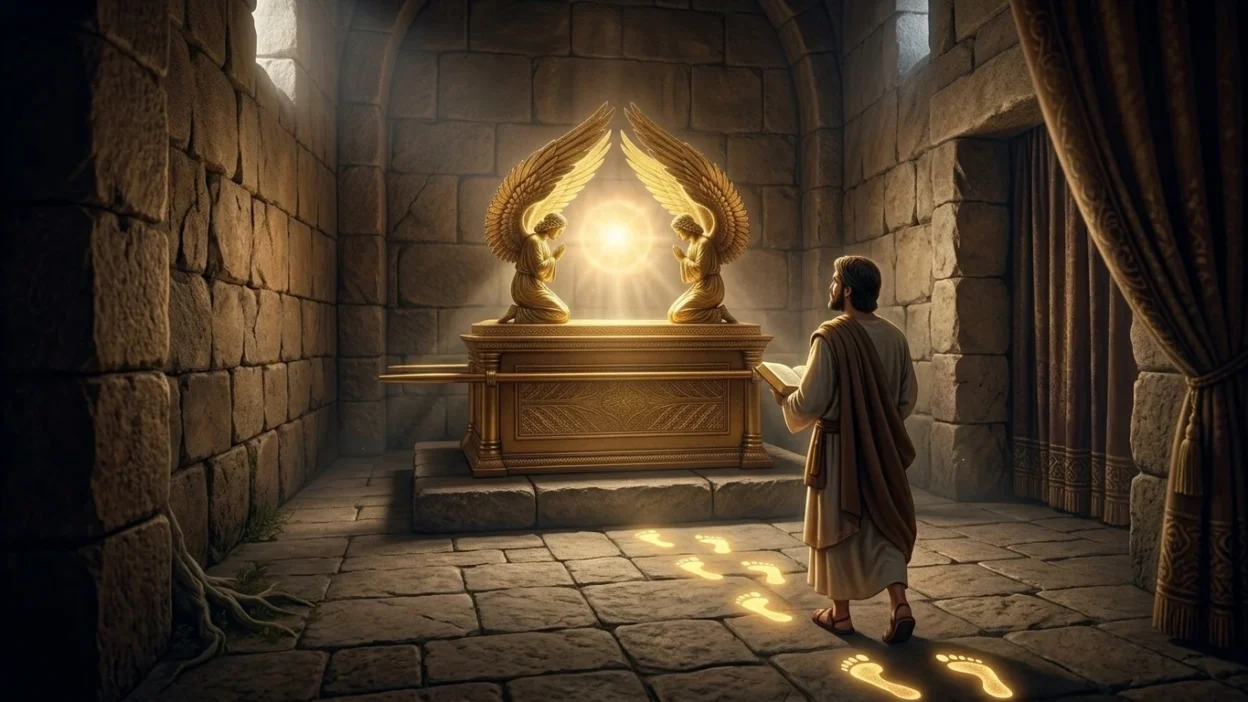
Imagine entering the Most Holy Place in the ancient tabernacle. The room is quiet and sacred. A golden chest stands before you, covered by a beautiful golden lid. Above it are two cherubim with wings spread over the cover. This was not an ordinary object. It stood at the heart of Israel’s worship and pointed to God’s holy presence. The mercy seat biblical meaning helps us understand God’s holiness, forgiveness, judgment, and grace.
The mercy seat biblical meaning becomes even clearer when we look at the Day of Atonement. Once a year, the high priest entered the Most Holy Place and brought sacrificial blood before the mercy seat. This act showed how seriously God treats sin while also revealing His desire to provide a way for people to receive forgiveness. Ultimately, the mercy seat points Christians toward the greater work of Jesus Christ and God’s amazing mercy.
Quick Answer
The mercy seat was the golden cover of the Ark of the Covenant in the Most Holy Place.
It represented God’s holy presence and His provision for atonement and forgiveness.
On the Day of Atonement, the high priest sprinkled sacrificial blood on it.
For Christians, it points forward to Christ’s sacrifice and God’s grace.
What Is the Mercy Seat in the Bible?
The mercy seat biblical meaning begins with the Ark of the Covenant.
The mercy seat was the special golden cover placed on top of the Ark. In Hebrew, it is called kapporet, a word connected with covering or making atonement.
Exodus 25:17 says:
“Make an atonement cover of pure gold—two and a half cubits long and a cubit and a half wide.”
Some Bible translations use “atonement cover” instead of “mercy seat.”
Two golden cherubim stood above the cover. Their wings stretched over it, creating a sacred space connected with God’s presence.
Key Meaning of the Mercy Seat
| Biblical Element | Meaning |
|---|---|
| Golden cover | Holiness and sacred worship |
| Ark | God’s covenant with Israel |
| Cherubim | God’s heavenly presence and holiness |
| Blood | Atonement for sin |
| Most Holy Place | God’s special presence |
| Mercy seat | Place connected with atonement and mercy |
Therefore, the mercy seat was much more than a decorative part of the Ark. It stood at the center of Israel’s relationship with a holy God.
Origin and History of the Mercy Seat
God instructed Moses to build the Ark and its mercy seat during the wilderness journey.
Exodus 25–30 provides detailed instructions for the tabernacle and its sacred furnishings.
The Ark contained the testimony of God’s covenant. Above it rested the mercy seat.
God told Moses in Exodus 25:22:
“There, above the cover between the two cherubim that are over the ark of the covenant law, I will meet with you.”
This statement is important.
The mercy seat became associated with God meeting with His people.
Later, when Solomon built the temple in Jerusalem, the Ark was placed in the Most Holy Place.
Historical Development
| Period | Mercy Seat Connection | Significance |
|---|---|---|
| Wilderness | Tabernacle | God’s presence traveled with Israel |
| Priesthood | Most Holy Place | Sacred worship and atonement |
| Day of Atonement | Blood placed before it | Sin was dealt with ceremonially |
| Temple period | Temple sanctuary | Continued covenant worship |
| New Testament | Christ’s atoning work | Fulfillment of sacrificial symbolism |
Thus, the mercy seat connects the Old Testament sacrificial system with the New Testament message of salvation.
Biblical and Religious Connection
The mercy seat has a strong connection to atonement.
Leviticus 16 describes the Day of Atonement, known as Yom Kippur.
On this special day, the high priest entered the Most Holy Place. He brought sacrificial blood and sprinkled it on and before the mercy seat.
Leviticus 16:14 describes this act.
The ritual demonstrated that sin separates people from a holy God and that atonement requires God’s appointed means.
However, the mercy seat also revealed God’s compassion.
God did not simply leave His people without hope. He provided a way for their sins to be covered and their relationship with Him to be restored.
This creates an important biblical balance:
God is holy, but God is also merciful.
The mercy seat brought these truths together.
The Spiritual Meaning of the Mercy Seat
The spiritual meaning of the mercy seat points to God’s mercy, forgiveness, holiness, presence, and reconciliation.
First, it reminds us that God takes sin seriously.
The sacred rituals surrounding the mercy seat showed that people could not casually approach God’s holy presence.
However, the mercy seat also communicated hope.
God Himself provided the way for atonement.
A Symbol of God’s Mercy
The name “mercy seat” draws attention to God’s compassion.
Instead of leaving humanity separated from Him, God provided a path toward reconciliation.
This becomes especially meaningful for Christians because the New Testament connects Jesus with this Old Testament imagery.
A Symbol of God’s Presence
God told Moses that He would meet with him above the cover between the cherubim.
Therefore, the mercy seat became a powerful picture of divine presence.
It reminds believers that God desires relationship with His people.
A Symbol of Forgiveness
The blood used in the Day of Atonement pointed toward the serious cost of sin and the need for cleansing.
This prepares the biblical story for the sacrifice of Christ.
How the Mercy Seat Points to Jesus
One of the most important New Testament connections appears in Romans 3:25.
Paul says that God presented Christ as a sacrifice of atonement through faith in His blood.
The Greek word Paul uses is related to the same concept associated with the mercy seat.
Because of this connection, many Christian interpreters understand Jesus as the ultimate fulfillment of the mercy-seat imagery.
The Old Testament used animal sacrifices as part of its system of atonement.
Jesus, however, offered Himself.
Hebrews 9 explains how Christ entered the greater heavenly reality, not simply an earthly sanctuary.
Therefore, the mercy seat points beyond the tabernacle toward Christ’s once-for-all sacrifice.
Old Covenant and Christ Compared
| Mercy Seat | Jesus Christ |
|---|---|
| Located in the Most Holy Place | Provides access to God |
| Connected with sacrificial blood | Shed His blood for sinners |
| Used in atonement rituals | Provides complete atonement |
| Associated with God’s presence | Reveals God to humanity |
| Part of the old covenant system | Establishes the new covenant |
This comparison shows why the mercy seat remains important to Christian theology.
Mercy Seat Symbolism in Christian Faith
The mercy seat biblical meaning also carries deep spiritual symbolism for believers today.
It can remind Christians that mercy is greater than condemnation.
It can also remind us that forgiveness comes from God rather than human effort.
The cherubim above the mercy seat provide another powerful image.
They stood over a place associated with God’s holiness and presence. This imagery reminds us that approaching God is a sacred matter.
At the same time, Christ gives believers confidence to approach God.
Hebrews 4:16 says:
“Let us then approach God’s throne of grace with confidence.”
Notice the beautiful connection between God’s holiness and His grace.
Because of Christ, believers do not need to hide from God in fear. Instead, they can approach Him with humility and confidence.
Mercy Seat in Modern Christian Understanding
The mercy seat is not normally used in Christian worship in the same way it functioned in ancient Israel.
However, its message continues to influence Christian teaching.
Today, Christians may use the idea of the mercy seat when discussing:
- God’s forgiveness
- Christ’s atonement
- Prayer and God’s presence
- Reconciliation with God
- Grace instead of condemnation
- The holiness of God
The concept also appears in Bible studies, sermons, Christian books, and discussions about the tabernacle.
Therefore, understanding the ancient setting helps Christians better appreciate the message of the gospel.
Why Do People Search for Mercy Seat Biblical Meaning?
People search for mercy seat biblical meaning because they encounter the phrase while reading Exodus, Leviticus, Hebrews, or Romans.
Others want to understand the symbolism of the Ark of the Covenant.
Some are studying the tabernacle and its furnishings.
Many Christians also want to understand how Old Testament sacrifices point toward Jesus.
The mercy seat can seem confusing at first because modern readers may not understand ancient priestly worship.
However, once its purpose becomes clear, the message becomes powerful.
It tells a story of sin, holiness, sacrifice, mercy, and reconciliation.
Common Misconceptions About the Mercy Seat
Was the Mercy Seat a Chair?
No.
Despite the word “seat,” it was not a chair designed for someone to sit on.
It was the cover of the Ark of the Covenant.
Was God Physically Sitting on It?
The Bible describes God’s presence above the mercy seat, but this does not mean God was physically contained inside the Ark.
The imagery communicates His special presence and authority.
Did the Mercy Seat Forgive Sin by Itself?
No.
The mercy seat belonged to the sacrificial system God established. The blood of sacrifices was used during atonement rituals.
The New Testament then points to Christ as the ultimate fulfillment of God’s plan for atonement.
Is the Mercy Seat the Same as the Ark?
No.
The Ark was the sacred chest.
The mercy seat was its golden cover.
Keeping this distinction clear makes the biblical description easier to understand.
Mercy Seat Compared With Other Biblical Symbols
| Symbol | Main Meaning | Connection to Christ |
|---|---|---|
| Mercy seat | Atonement and mercy | Christ provides ultimate atonement |
| Ark | Covenant and God’s presence | Christ fulfills God’s covenant promises |
| Altar | Sacrifice | Christ offers Himself |
| Veil | Separation from God’s holiness | Christ provides access to God |
| Lamb | Sacrifice and innocence | Jesus is the Lamb of God |
Together, these symbols form a larger biblical picture.
They show how Scripture moves from the Old Testament sacrificial system toward the saving work of Jesus.
What the Mercy Seat Teaches Christians Today
The mercy seat biblical meaning offers several practical lessons.
First, God is holy. We should approach Him with reverence.
Second, God is merciful. He provides a way for sinners to return to Him.
Third, forgiveness comes through God’s provision, not human pride.
Fourth, Christians can approach God through Christ with confidence.
Finally, believers should extend mercy to others.
Jesus taught His followers to forgive and show compassion because they themselves have received God’s grace.
Therefore, the mercy seat should not remain only an ancient Bible study topic. Its message can shape how Christians pray, forgive, worship, and trust God.
Final Thought
The mercy seat biblical meaning reveals a beautiful truth about God’s character. The mercy seat stood in the Most Holy Place as part of Israel’s worship and atonement system. It showed both the seriousness of sin and God’s desire to provide mercy.
Most importantly, the mercy seat points Christians toward Jesus Christ. Through Him, believers find forgiveness, reconciliation, and confident access to God. What once required an earthly priest and sacred ritual ultimately points toward Christ’s greater work of salvation.
So, when you read about the mercy seat, remember more than a golden cover above the Ark. Remember the God who is holy, merciful, faithful, and ready to forgive. His grace invites you to come near, trust Him, and walk in the freedom of His mercy.
FAQs
What is the mercy seat in the Bible?
The mercy seat was the golden cover of the Ark of the Covenant. It was located in the Most Holy Place and was connected with God’s presence and the Day of Atonement.
What does the mercy seat symbolize?
The mercy seat symbolizes God’s holiness, mercy, presence, atonement, forgiveness, and reconciliation.
Where is the mercy seat mentioned in Scripture?
The mercy seat appears prominently in Exodus 25, Leviticus 16, and other passages describing the tabernacle, priesthood, and atonement.
How does the mercy seat point to Jesus?
Romans 3:25 connects Christ’s atoning sacrifice with language related to the mercy seat. Christians therefore see the mercy seat as part of the Old Testament picture fulfilled through Jesus.
Is the mercy seat the same as the Ark of the Covenant?
No. The Ark was the sacred chest, while the mercy seat was the golden cover placed on top of the Ark.


