
Introduction
Have you ever wondered why some people remain calm, loving, and joyful even during life’s hardest moments? The Bible explains that these qualities are not produced by human effort alone but by God’s Spirit working within believers. That is why many people search for the fruit of the Spirit biblical meaning. They want to understand what these spiritual qualities are and how they shape a faithful Christian life.
The fruit of the Spirit biblical meaning comes from Galatians 5:22–23, where the Apostle Paul describes the evidence of a life led by the Holy Spirit. Rather than following sinful desires, believers are called to grow in love, joy, peace, and other godly virtues. Understanding the fruit of the Spirit biblical meaning helps Christians deepen their faith, strengthen their relationship with God, and reflect Christ in everyday life.
Quick Answer
The fruit of the Spirit biblical meaning refers to the nine godly qualities produced in believers through the Holy Spirit. These include love, joy, peace, patience, kindness, goodness, faithfulness, gentleness, and self-control, showing the character of Christ in daily living.
What Is the Fruit of the Spirit Biblical Meaning?
The fruit of the Spirit biblical meaning is found in Galatians 5:22–23. Paul explains that when believers live by the Holy Spirit, their lives naturally produce spiritual fruit.
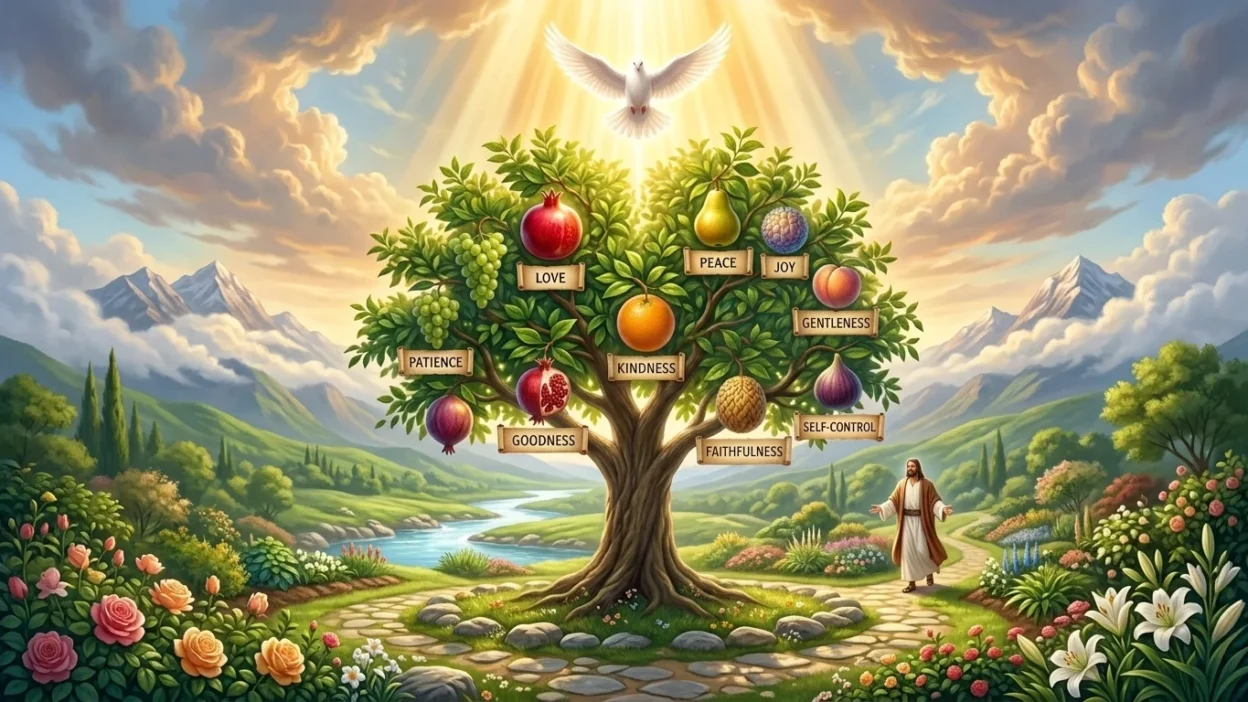
Unlike physical fruit that grows on a tree, spiritual fruit grows in the heart. It is the visible evidence of God’s work within a Christian.
The nine qualities listed by Paul are:
- Love
- Joy
- Peace
- Patience
- Kindness
- Goodness
- Faithfulness
- Gentleness
- Self-control
These virtues are not earned through human effort. They grow as believers remain close to Jesus Christ and follow the guidance of the Holy Spirit.
Meaning at a Glance
| Aspect | Meaning |
|---|---|
| Biblical Meaning | Godly character produced by the Holy Spirit |
| Main Scripture | Galatians 5:22–23 |
| Spiritual Meaning | Living like Christ |
| Symbolism | Spiritual growth and maturity |
| Key Theme | Transformation through God’s Spirit |
Origin and History in Scripture
The fruit of the Spirit biblical meaning originates in Paul’s Letter to the Galatians.
Paul wrote to churches struggling with legalism and false teaching. He reminded believers that salvation comes through faith in Jesus Christ, not by keeping religious laws.
Instead of focusing only on outward actions, Paul emphasized inward transformation.
The idea of spiritual fruit also appears throughout Scripture.
Jesus taught that healthy trees produce good fruit (Matthew 7:17).
In John 15, He described Himself as the true vine and His followers as branches that bear fruit by remaining in Him.
These teachings form the foundation for understanding spiritual growth.
Origin Table
| Topic | Description |
|---|---|
| Main Passage | Galatians 5:22–23 |
| Writer | Apostle Paul |
| Related Teaching | John 15 |
| Symbol | Fruit growing from a healthy tree |
| Main Theme | Life led by the Holy Spirit |
Fruit of the Spirit in Christian Faith
The fruit of the Spirit biblical meaning is central to Christian living.
Each fruit reflects the character of Jesus Christ.
Love shows God’s compassion.
Joy reflects confidence in God’s promises.
Peace comes from trusting Him.
Patience helps believers endure trials.
Kindness and goodness demonstrate God’s heart toward others.
Faithfulness encourages loyalty to God.
Gentleness shows humility.
Self-control helps Christians resist temptation.
Together, these qualities reveal a transformed life.
Spiritual Meaning and Symbolism
The fruit of the Spirit biblical meaning carries deep spiritual symbolism.
Fruit grows slowly with care and nourishment. In the same way, spiritual growth develops through prayer, Scripture, worship, and obedience.
Each fruit symbolizes a different part of Christian maturity.
Love represents God’s greatest command.
Joy reminds believers that true happiness comes from Christ.
Peace reflects confidence in God’s care.
Patience teaches endurance.
Kindness and goodness reveal compassion.
Faithfulness represents commitment.
Gentleness reflects humility.
Self-control symbolizes victory over sinful desires.
Together, these fruits show the presence of the Holy Spirit.
Spiritual Symbolism Table
| Fruit | Spiritual Meaning |
|---|---|
| Love | God’s unconditional care |
| Joy | Lasting happiness in Christ |
| Peace | Trust in God’s promises |
| Patience | Endurance through trials |
| Kindness | Compassion toward others |
| Goodness | Living with integrity |
| Faithfulness | Loyalty to God |
| Gentleness | Humility and grace |
| Self-control | Victory over temptation |
Why Do People Search for Fruit of the Spirit Biblical Meaning?
Many people search for the fruit of the Spirit biblical meaning because they want practical guidance for Christian living.
Some are studying Galatians for Bible study.
Others want to understand how spiritual growth happens.
Parents and teachers often use this passage to teach children about Christian character.
Many believers also seek encouragement to become more like Christ during difficult seasons.
The message offers hope because it reminds Christians that God works within them every day.
Cultural and Modern Understanding
Today, the phrase “fruit of the Spirit” is commonly found in churches, devotionals, Bible studies, and Christian education.
Many people use the nine fruits as personal goals.
While this can be helpful, the Bible teaches that these qualities are not simply personality traits.
They are the result of the Holy Spirit transforming believers from the inside out.
Modern culture often emphasizes self-improvement, but Scripture emphasizes God’s transforming power.
Common Misconceptions
Several misunderstandings surround this teaching.
Some believe the fruit of the Spirit is a checklist for earning God’s favor.
Others think believers should instantly display all nine qualities perfectly.
The Bible teaches that spiritual fruit grows gradually.
Growth takes time, prayer, obedience, and dependence on God.
The goal is not perfection but continual transformation through Christ.
Fruit of the Spirit Compared with Works of the Flesh
| Fruit of the Spirit | Works of the Flesh |
|---|---|
| Love | Hatred |
| Joy | Selfish pleasure |
| Peace | Conflict |
| Patience | Anger |
| Kindness | Cruelty |
| Self-control | Lack of discipline |
Lessons for Believers Today
Understanding the fruit of the Spirit biblical meaning encourages Christians to stay connected to Christ every day.
Prayer, Bible reading, worship, and obedience allow the Holy Spirit to shape character over time.
As believers grow spiritually, these fruits become visible in their relationships, decisions, and daily actions, pointing others toward God’s love.
Final Thought
The fruit of the Spirit biblical meaning reminds believers that genuine Christian character is not created by human effort but by the transforming work of the Holy Spirit. As Christians remain connected to Jesus Christ through prayer, Scripture, worship, and faithful obedience, spiritual fruit naturally grows in their lives. Love replaces bitterness, peace overcomes fear, and self-control strengthens daily choices. This growth may be gradual, but it reflects God’s ongoing work within every believer. The Fruit of the Spirit offers hope, encouragement, and a beautiful picture of what a Christ-centered life looks like. Every believer is invited to grow in these qualities and become a living witness of God’s grace.
FAQs
What is the Fruit of the Spirit according to the Bible?
The Fruit of the Spirit refers to the nine spiritual qualities produced by the Holy Spirit in every believer’s life.
Where is the Fruit of the Spirit found in the Bible?
It is found in Galatians 5:22–23, written by the Apostle Paul.
Why is the Fruit of the Spirit important?
It shows the character of Jesus Christ and demonstrates spiritual growth in believers.
Can Christians grow in the Fruit of the Spirit?
Yes. Through prayer, Bible study, obedience, and dependence on the Holy Spirit, believers continue growing spiritually.
Is the Fruit of the Spirit different from spiritual gifts?
Yes. Spiritual gifts are abilities for serving others, while the Fruit of the Spirit describes Christian character and maturity.

Oliver Henry is a dedicated dream meaning writer and symbolism enthusiast who explores dream interpretations, symbolic messages, and subconscious themes. He shares informative insights that help readers better understand the meanings behind their dreams.