Introduction
The temple biblical meaning is deeply connected with God’s presence, worship, holiness, sacrifice, and fellowship with His people. Throughout Scripture, the temple was more than a physical building. It was a sacred place where God’s people worshiped Him and where His presence was specially recognized. The temple also played a central role in Israel’s religious life, especially through prayer, sacrifices, priests, festivals, and offerings.
Understanding the temple biblical meaning also requires looking beyond the buildings described in the Old Testament. The Bible gradually develops the idea of God’s dwelling place. From the tabernacle in the wilderness to Solomon’s Temple and later temples in Jerusalem, Scripture shows God’s desire to dwell among His people. Furthermore, the New Testament gives this idea a deeper meaning by teaching that Jesus is the true meeting place between God and humanity and that believers themselves become temples of the Holy Spirit.
Quick Answer
The temple biblical meaning refers to a sacred dwelling place associated with God’s presence, worship, holiness, and fellowship with His people.
In the Old Testament, the Jerusalem Temple was the central place of Israel’s worship and sacrifices.
In the New Testament, the meaning expands as Jesus and believers are described in connection with God’s dwelling presence.
What Is the Biblical Meaning of Temple?
In Scripture, a temple is a place set apart for worship and associated with the presence of God.
The temple was not believed to contain God as though He could be limited to one building. Instead, it represented His special covenant presence among His people.
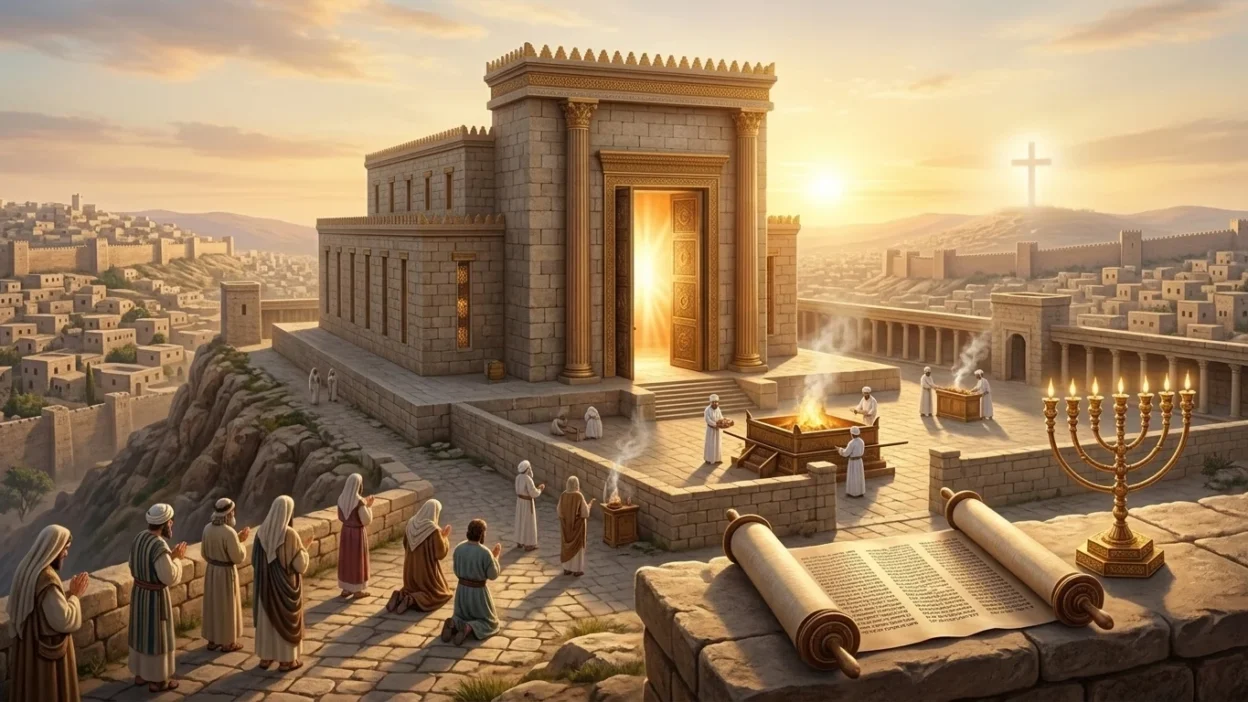
The temple included areas with different levels of holiness. The Most Holy Place, also called the Holy of Holies, was the innermost sacred area.
The high priest entered this area under specific conditions, especially on the Day of Atonement.
Temple Meaning at a Glance
| Aspect | Biblical Meaning |
|---|---|
| Temple | Sacred place of worship |
| Main Purpose | Fellowship with God |
| Central Location | Jerusalem |
| Key Activities | Prayer, sacrifice, worship |
| Most Holy Place | Symbolized God’s presence |
| Spiritual Theme | Holiness and communion |
Origin and History of the Temple
The temple biblical meaning becomes clearer when we follow the development of God’s dwelling place throughout Scripture.
Before Solomon’s Temple was built, Israel worshiped at the tabernacle.
The tabernacle was a portable sanctuary that traveled with Israel during the wilderness journey. It represented God’s desire to dwell among His covenant people.
Later, King David desired to build a permanent house for God. However, God appointed Solomon, David’s son, to build the Temple in Jerusalem.
Solomon’s Temple was completed and dedicated to God. At its dedication, God’s glory filled the Temple, showing the importance of God’s presence.
Origin and History Table
| Biblical Period | Significance |
|---|---|
| Wilderness | Tabernacle served as sanctuary |
| David | Planned for a permanent house |
| Solomon | First Temple built |
| Babylonian Exile | First Temple destroyed |
| Second Temple | Temple rebuilt |
| Jesus’ Ministry | Temple remained central to Jewish worship |
| New Testament | Temple imagery receives deeper spiritual meaning |
Solomon’s Temple and Its Purpose
Solomon’s Temple became the center of Israel’s worship.
It included areas for priests, sacrifices, worship, and sacred objects.
The Temple was also connected with prayer.
In 1 Kings 8, Solomon prayed during the Temple’s dedication and acknowledged God’s greatness. He recognized that even heaven could not contain God, emphasizing that the Temple was a special place of worship rather than a limitation on God’s presence.
The Temple therefore represented a meeting point between God’s covenant relationship and Israel’s worship.
Moreover, its design taught Israel about holiness and the seriousness of approaching God.
The Temple and God’s Presence
One of the most important ideas behind the temple biblical meaning is God’s presence.
The Bible repeatedly connects the sanctuary and Temple with God’s glory.
This does not mean God was physically confined inside the Temple.
Instead, the Temple served as a visible reminder that God was with His people.
The Most Holy Place especially represented God’s presence.
The Ark of the Covenant was kept there, and God’s glory symbolically dwelled above the mercy seat.
This imagery taught Israel that God is holy, powerful, and worthy of reverence.
Spiritual Meaning of the Temple
The temple biblical meaning carries rich spiritual symbolism.
First, the Temple represents God’s presence.
It reminds believers that God desires fellowship with His people.
Second, it represents holiness.
The Temple was set apart, and its worship practices taught Israel to approach God with reverence and never treat His presence casually.
Third, it represents atonement.
The Israelites offered sacrifices at the Temple to show the seriousness of sin and their need for forgiveness.
Fourth, it represents worship.
The Temple was a place where people brought prayers, offerings, praise, and thanksgiving.
Finally, it points toward God’s greater plan to dwell with humanity.
Spiritual Symbolism Table
| Temple Element | Spiritual Meaning |
|---|---|
| Temple | God’s dwelling presence |
| Holy Place | Sacred fellowship |
| Most Holy Place | God’s holiness and presence |
| Altar | Sacrifice and atonement |
| Priests | Service and mediation |
| Worship | Devotion and praise |
| Temple Veil | Separation between holy God and sinful humanity |
Jesus and the Temple
The New Testament gives the temple biblical meaning an important new dimension.
Jesus regularly taught in the Temple during His earthly ministry.
One of the most significant passages appears in John 2:19–21, where Jesus spoke about destroying and raising the Temple. John explains that Jesus was speaking about the temple of His body.
This is a major theological development.
Jesus presented Himself as the ultimate meeting place between God and humanity.
In other words, people no longer understood God’s presence as limited to a physical building.
Instead, Christ became central to understanding how humanity encounters God.
This also explains why the New Testament places such strong emphasis on Jesus’ death, resurrection, and role as mediator.
The Temple, Sacrifice, and Atonement
The Temple was closely connected with sacrifice.
Under the Old Covenant, priests offered sacrifices according to God’s instructions.
These sacrifices addressed sin, worship, thanksgiving, purification, and covenant responsibilities.
The Day of Atonement was especially important. On this day, the high priest entered the Most Holy Place in connection with atonement for the sins of Israel.
These practices helped reveal the seriousness of sin and the need for cleansing.
However, the New Testament teaches that Jesus’ sacrifice provides the ultimate fulfillment of the sacrificial system.
Christ’s death served as the decisive sacrifice that brings forgiveness and reconciliation with God.
The Temple Veil and Access to God
The Temple contained a veil separating the Holy Place from the Most Holy Place.
This veil represented the separation between God’s holiness and sinful humanity.
The New Testament gives this symbol powerful meaning.
Ephesians 2:19–22 teaches that God builds believers together through the Spirit into a dwelling place for Himself.
This event symbolizes a dramatic change in access to God.
Through Christ, God invites believers into a new relationship with Him.
Therefore, the Temple veil helps explain the biblical movement from restricted access under the Old Covenant toward direct access to God through Christ.
Believers as God’s Temple
One of the most important New Testament teachings identifies believers as part of God’s spiritual temple.
Paul writes in 1 Corinthians 6:19 that the believer’s body is a temple of the Holy Spirit.
Similarly, 1 Corinthians 3:16 teaches that God’s Spirit dwells among His people.
This means the temple biblical meaning extends beyond a physical structure to include God’s spiritual dwelling among His people.
For Christians, the Holy Spirit makes God’s presence real within believers.
This gives the idea of holiness a deeply personal meaning.
A Christian’s body, choices, relationships, and daily life should reflect God’s presence.
The Church as God’s Dwelling Place
The New Testament also uses temple imagery for the community of believers.
Ephesians 2:19–22 teaches that the Spirit builds God’s people together into a dwelling place for Him.
This teaches that Christianity is not only about individual spiritual experience.
God also reveals His presence through the gathered community of believers.
As a result, Christians should show one another love, maintain unity, pursue holiness, and treat each other with respect.
The temple image therefore points toward both personal and communal spiritual life.
Temple vs. Tabernacle
| Feature | Tabernacle | Temple |
|---|---|---|
| Structure | Portable | Permanent |
| Main Era | Wilderness and early Israel | Jerusalem monarchy onward |
| Purpose | Worship and God’s presence | Worship and God’s presence |
| Location | Moved with Israel | Jerusalem |
| Major Builder | God instructed Moses | Solomon |
| Spiritual Theme | God dwelling among His people | God’s covenant presence |
Both structures served the same broad purpose: representing God’s dwelling among His people.
The Temple developed the tabernacle pattern into a permanent center of worship.
Why Do People Search for the Temple Biblical Meaning?
People search for the temple biblical meaning because the Temple appears throughout both Old and New Testament teaching.
Common questions include:
- Why was the Temple important?
- What happened inside the Temple?
- What did the Holy of Holies represent?
- Why did Jesus speak about the Temple?
- Are Christians temples of the Holy Spirit?
- What does the Temple symbolize spiritually?
These questions are important because Temple imagery helps connect major biblical themes such as holiness, sacrifice, God’s presence, prayer, redemption, and fellowship.
Understanding the Temple also makes many New Testament passages easier to understand.
Cultural and Modern Usage
Today, the word “temple” can refer to religious buildings in many different cultures and religions.
However, the biblical Temple has a specific historical and theological meaning.
The Temple was closely connected with Israel’s worship in Jerusalem and its covenant relationship with God.
For Christians, the Temple also has symbolic significance because the New Testament applies temple language to Jesus, believers, and the church.
Therefore, modern readers should distinguish the biblical Temple from the broader cultural use of the word.
Common Misconceptions About the Temple
One misconception is that God literally lived inside the Temple.
Scripture teaches that no building can contain or confine God. Solomon himself acknowledged this during the Temple dedication.
Another misconception is that the Temple was simply a place for religious ceremonies.
It was much more. It represented God’s covenant presence and Israel’s relationship with Him.
A third misconception is that the Temple has no relevance for Christians today.
The New Testament gives Temple imagery new significance through Christ and the Holy Spirit.
Finally, we should understand the Temple alongside the biblical themes of sacrifice, holiness, prayer, and God’s presence.
Important Bible Verses About the Temple
Several passages are especially helpful for studying the temple biblical meaning:
- Exodus 25:8 — God desires to dwell among His people.
- 1 Kings 8:27–30 — Solomon dedicates the Temple.
- Psalm 27:4 — Desire to dwell in God’s presence.
- Isaiah 56:7 — God’s house described as a house of prayer.
- John 2:19–21 — Jesus connects the Temple with His body.
- Matthew 27:51 — The Temple veil is torn at Jesus’ death.
- 1 Corinthians 3:16 — Believers are connected with God’s temple.
- 1 Corinthians 6:19 — The believer’s body is a temple of the Holy Spirit.
- Ephesians 2:21–22 — God’s people become a dwelling place for God through the Spirit.
Final Thought
The temple biblical meaning is ultimately about God’s desire to dwell among His people. In the Old Testament, the tabernacle and Temple provided sacred places for worship, sacrifice, prayer, and covenant fellowship. They reminded Israel of God’s holiness and taught His people to approach Him with reverence. Furthermore, the New Testament reveals a deeper fulfillment of this imagery through Jesus Christ. His body, sacrifice, and resurrection transform how believers understand access to God. The Holy Spirit now dwells within believers, while God’s people together serve as His spiritual dwelling place. Therefore, the Temple points beyond an ancient building toward a greater biblical truth: God desires a living relationship with His people and ultimately brings them into His presence through Christ.
FAQs
What is the biblical meaning of temple?
The biblical Temple served as a sacred place where Israel experienced God’s presence, worshiped Him, offered sacrifices, prayed, pursued holiness, and honored the covenant.
What did the Temple represent?
The Temple represented God’s special presence among His people and their relationship with Him through worship and covenant.
Why is the Temple important to Christians?
The Temple helps Christians understand themes such as God’s presence, sacrifice, holiness, redemption, and access to God through Jesus Christ.
Are Christians called temples in the Bible?
Yes. The New Testament teaches that believers are temples of the Holy Spirit and that God’s people collectively form a spiritual dwelling place for God.
What happened to the Temple veil when Jesus died?
The Gospels state that God tore the Temple veil when Jesus died, symbolizing new access to God through Christ.

John Sebastian is a dream interpretation writer and symbolism researcher, passionate about decoding dreams and exploring their meanings. He creates insightful content that helps readers understand dream symbols, emotions, and personal experiences.