
Introduction
Have you ever wondered why angels appear so often in the Bible? From bringing messages of hope to protecting God’s people, angels have fascinated believers for centuries. Many people search for the angels biblical meaning because they want to understand who angels are, what they do, and how they fit into God’s plan. The Bible offers clear answers that go beyond popular stories and traditions.
The angels biblical meaning reveals that angels are created spiritual beings who serve God and carry out His will. They are messengers, worshipers, protectors, and servants of the Lord. Understanding the angels biblical meaning helps Christians appreciate God’s care, trust His guidance, and recognize His power throughout Scripture and everyday life.
Quick Answer
The angels biblical meaning refers to God’s created spiritual beings who serve Him as messengers, protectors, worshipers, and ministers. Throughout the Bible, angels carry out God’s commands, deliver important messages, and remind believers of His constant presence and care.
What Is the Angels Biblical Meaning?
The angels biblical meaning centers on God’s heavenly servants who faithfully accomplish His purposes. The word “angel” comes from the Greek word angelos, meaning “messenger.”
Throughout Scripture, angels appear as God’s representatives. They announce important events, protect His people, worship before His throne, and carry out His divine will.
Unlike humans, angels are spiritual beings created by God. They are not all-powerful or all-knowing. Instead, they serve under God’s authority and point people toward Him rather than drawing attention to themselves.
The Bible teaches that angels rejoice when sinners repent and continually worship the Lord in heaven.
Meaning at a Glance
| Aspect | Meaning |
|---|---|
| Biblical Meaning | God’s spiritual messengers |
| Spiritual Meaning | Divine guidance and protection |
| Symbolism | God’s presence, service, holiness |
| Main Role | Serving God’s purposes |
| Key Theme | Obedience to God’s will |
Origin and History of Angels in the Bible
Angels appear throughout both the Old and New Testaments.
The Hebrew word for angel is mal’akh, meaning “messenger.” The Greek word angelos carries the same meaning.
One of the earliest appearances occurs when angels minister to Hagar in Genesis. Later, angels appear to Abraham, Jacob, Moses, Daniel, Mary, Joseph, the shepherds, and many others.
One of the most significant angelic announcements was Gabriel’s message to Mary about the birth of Jesus (Luke 1:26-38).
From Genesis to Revelation, angels consistently reveal God’s activity among His people.
Origin Table
| Topic | Description |
|---|---|
| Hebrew Word | Mal’akh |
| Greek Word | Angelos |
| Meaning | Messenger |
| First Biblical Appearances | Genesis |
| Final Book | Revelation |
Angels in the Bible and Christian Faith
The angels biblical meaning is closely connected to God’s work throughout salvation history.
Angels announced Christ’s birth.
They ministered to Jesus after His temptation.
Strengthened Him in Gethsemane.
They proclaimed His resurrection.
They witnessed His ascension.
The Bible also teaches that angels rejoice over every sinner who repents (Luke 15:10).
Key Bible passages include:
- Psalm 91:11
- Daniel 6:22
- Luke 1:26-38
- Matthew 28:5-7
- Hebrews 1:14
These passages show that angels always serve God’s purposes rather than acting independently.
Spiritual Meaning of Angels
The angels biblical meaning carries rich spiritual symbolism.
Angels represent:
- God’s guidance
- Divine protection
- Faithfulness
- Holiness
- Obedience
- Hope
- God’s presence
- Heavenly worship
Spiritually, angels remind believers that God is actively working even when they cannot see Him.
Their obedience encourages Christians to trust God’s plan with willing hearts.
Whenever angels appear in Scripture, the focus remains on God’s glory rather than the angels themselves.
Spiritual Symbolism Table
| Symbol | Spiritual Meaning |
|---|---|
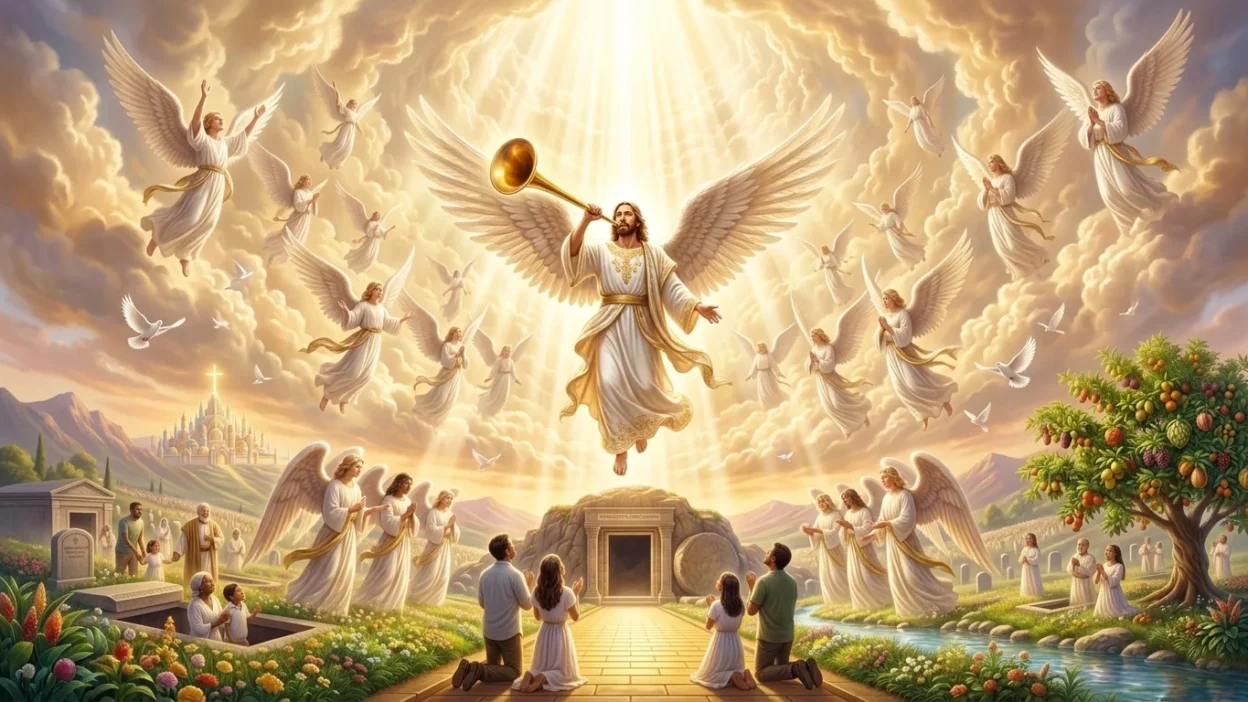
| Wings | Readiness to serve God |
| White Clothing | Purity and holiness |
| Trumpet | God’s announcement |
| Light | God’s glory |
| Sword | Divine authority and protection |
Why Do People Search for Angels Biblical Meaning?
People search for the angels biblical meaning for many reasons.
Some have experienced unusual dreams involving angels.
Others wonder whether guardian angels exist.
Many study Bible stories and want to understand the role of angels more clearly.
Some seek comfort during difficult times, hoping to learn how God cares for His people through His heavenly servants.
Understanding the biblical teaching provides confidence without relying on myths or speculation.
Cultural and Modern Understanding
Today’s culture often portrays angels as decorative figures, winged babies, or symbols of luck.
Movies, television, greeting cards, and artwork frequently present angels in ways that differ from Scripture.
The Bible gives a much richer picture.
Angels are mighty spiritual beings created to worship God and serve His purposes.
Their true identity is rooted in God’s authority rather than human imagination.
Common Misconceptions About Angels
Several misunderstandings surround angels.
Some believe people become angels after death.
Others think angels should be worshiped.
Some believe angels grant wishes or act independently from God.
The Bible teaches otherwise.
Angels remain created servants of God, and worship belongs to God alone.
Every appearance of angels in Scripture ultimately directs attention toward God’s power and glory.
Angels Compared with Humans
| Angels | Humans |
|---|---|
| Created spiritual beings | Created in God’s image |
| Serve God’s commands | Called to follow God |
| Do not marry | Marriage is part of earthly life |
| Worship God continually | Worship God by faith |
| Powerful servants | Recipients of God’s salvation |
Lessons We Can Learn from Angels
Understanding the angels biblical meaning encourages believers to trust God’s unseen care.
Angels demonstrate complete obedience, joyful worship, humble service, and unwavering faithfulness.
Their example reminds Christians to serve God with willing hearts and confidence in His perfect plan.
Even when unseen, God’s protection and guidance remain constant for those who trust Him.
Final Thought
The angels biblical meaning reveals far more than beautiful heavenly beings. Scripture presents angels as faithful servants who carry out God’s will, protect His people according to His purpose, and continually worship before His throne. Their appearances throughout the Bible remind believers that God is always active, even when His work cannot be seen with human eyes. Rather than drawing attention to themselves, angels always point people toward God’s glory, His promises, and His plan of salvation through Jesus Christ. As Christians study the role of angels, they are encouraged to trust God’s care, remain faithful in obedience, and worship the Lord with confidence, knowing His heavenly kingdom is always at work.
FAQs
What is the biblical meaning of angels?
Angels are created spiritual beings who serve God as messengers, protectors, worshipers, and ministers according to His will.
What do angels symbolize in the Bible?
They symbolize God’s guidance, protection, holiness, obedience, hope, and His active presence among His people.
Do people become angels after death?
No. The Bible teaches that humans and angels are separate creations with different purposes.
What is the main purpose of angels?
Their primary purpose is to worship God, serve Him faithfully, and carry out His commands.
Are angels still active today?
The Bible teaches that angels continue serving God and ministering according to His will, although their work is often unsee.

John Sebastian is a dream interpretation writer and symbolism researcher, passionate about decoding dreams and exploring their meanings. He creates insightful content that helps readers understand dream symbols, emotions, and personal experiences.